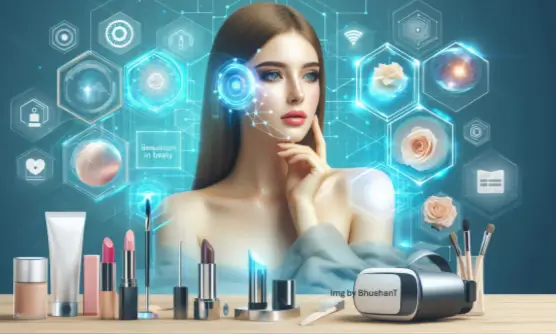

Artificial intelligence in beauty technology blends perception, comprehension, and action to tailor experiences at scale. By analyzing user inputs, preferences, and context, ML translates signals into diagnostics, routines, and product recommendations while refining accuracy over time. Visual AI enables real-time try-ons and ingredient rationales, converting imagery into quantitative attributes. With governance and regulation guiding privacy and transparency, the ecosystem balances safety with personalization, inviting sustained evaluation as cross-population performance and user trust evolve. The implications are substantial, and gaps persist that merit scrutiny.
What AI Brings to Beauty Tech: Foundational Capabilities
The foundational capabilities of artificial intelligence in beauty tech encompass perception, comprehension, and action that together enable personalized, scalable experiences.
In practice, data-driven systems evaluate user inputs, preferences, and context, translating them into actionable recommendations.
Machine learning models continually refine accuracy, delivering consistent outcomes.
These foundational capabilities empower adaptable tools, enhancing user autonomy, efficiency, and confidence while preserving privacy and ethical considerations.
From Skin Signals to Personal Routines: AI in Skin Analysis and Diagnostics
From the broad capabilities of AI in beauty tech, recent developments translate raw skin signals into actionable diagnostics and personalized routines. The approach emphasizes quantitative metrics, improving diagnostic accuracy while guiding users toward tailored regimens.
Emphasis on data privacy and regulatory compliance ensures transparent data handling, enabling informed choices without compromising autonomy.
Analysts quantify signals, validate models, and monitor performance across diverse populations.
See also :karaktech
Visual AI and Product Personalization: Try-ons, Recommendations, and Formulation Insights
Visual AI technologies enable real-time try-ons, personalized recommendations, and formulation insights by translating visual cues into quantitative product attributes. The approach supports scalable personalization experiments, revealing how consumer preferences shift across shades, textures, and ingredients. Emphasis on algorithm transparency helps users understand recommendations and ingredient rationales. The perspective remains data-driven, user-focused, and technically adept, prioritizing freedom to explore diverse, tailored beauty solutions.
Safety, Data, and the Professional Ecosystem: Ethics, Regulation, and Trade-offs
In the wake of scalable personalization frameworks for try-ons and formulation insights, the Safety, Data, and the Professional Ecosystem section examines how ethics, regulation, and practical trade-offs shape the beauty tech landscape.
Data governance structures protect consumer rights, while the ethics paradox prompts nuanced risk balancing.
Transparency, accountability, and proportional safeguards enable innovation without compromising user autonomy or industry trust.
Frequently Asked Questions
How Do AI Models Handle Cultural Beauty Standards?
AI models address cultural beauty standards by learning diverse data, minimizing bias, and adjusting outputs for cultural nuance; they support beauty normalization while preserving individual preference, enabling user freedom through transparent, data-driven adjustments and continuous performance evaluation.
Can AI Bias Affect Product Recommendations?
A paradoxical warning echoes: AI bias can skew product recs, influencing choices. The system highlights bias in product recs and data privacy concerns, emphasizing data-driven, user-focused safeguards, transparent models, and freedom for diverse users in decision-making.
What Are Data Privacy Risks in Beauty AI?
Data privacy risks in beauty AI center on data collection, storage, and usage practices. A rigorous risk assessment identifies potential breaches, de-identification failures, and consent gaps, guiding safeguards that protect users while preserving innovation and freedom to access personalized services.
How Reliable Are AI Skin Diagnostics Across Ages?
AI skin diagnostics show moderate reliability across ages, yet universal ageism and cross-cultural validation remain uneven; results favor adults. Data-driven, user-focused assessments suggest cautious personal use, with transparent benchmarks and ongoing calibration for diverse skin types and age groups.
Will AI Reduce or Replace Human Expert Roles?
AI is unlikely to fully replace human experts; rather, roles shift toward oversight and interpretation. AI ethics and bias mitigation become essential, ensuring transparent, user-focused decisions supported by data-driven safeguards and collaborative human–machine workflows that preserve autonomy.
Conclusion
AI-powered beauty tech unites perception, analysis, and action to deliver personalized diagnostics, routines, and product guidance. From skin signal interpretation to visual try-ons, these systems translate data into actionable recommendations while advancing safety, governance, and transparency. A hypothetical case: a dermatologist-led platform leverages AI to analyze 3D skin scans, tailor a regimen, and simulate product performance over 90 days, improving adherence and measurable skin metrics. This data-driven approach balances efficacy with privacy and ethical considerations for scalable consumer care.